Friday, 1 June 2012

Eating out: Monkey Bar ~ Flying high

Images by Kunal Chandra


‘Hey, let’s meet for a drink this evening. We could wrap up that deal…’

‘Sure, but where shall we go for dinner later?’

Quite out of the blue, Bangaloreans have a one-stop answer to such everyday dilemmas. One that bypasses the hearty (sometimes stodgy) fare and standard tipples around this pub city. If you ask me, all foodie and pub-hopping roads today lead to the spanking new Monkey Bar, India’s first gastropub!

This funky take on the global phenomenon of a gastropub had a soft launch in late May. Its tagline is right on cue:  ‘New York meets Bangalore, Bangalore meets New York.’ Its logo? Three winged monkeys – one in sharp shades, one with headphones on, the third with a pipe. 

What’s a gastropub? A restaurant-pub that yokes together pub ambience, fine food, affordable prices, and great service. The term originated in the UK in 1991, when new generation pub-goers tired of a ploughman’s lunch or fish-n-chips. By 2000, the US had Father’s Office in L.A., The Spotted Pig in Manhattan, and more. Norway joined the bandwagon in 2009. By 2012, The Hand & Flowers gastropub in Buckinghamshire had earned 2 Michelin stars.    

Back in Bangalore, a blackboard at the Monkey Bar entrance reads: “Welcome! We’re teething. Please bear with us.” Grinning, we step in. First impressions? Wooden floors, eight-seater bench-booths, exposed brick walls. Assorted light fixtures and retro posters strung together with casual cunning. More intimate tables for four. A bright Vespa scooter parked on a ledge.  Nostalgia-prompts line the walls: a Hershey’s plaque, a curved blackboard that promises an American-style breakfast in the future. A DJ who spins retro music – Abba, Don McLean, Ozzy Ozbourne, et al – has us nodding in approval long before we’ve downed our first drink.

I do not drink beer. But the edgy cocktails menu, like the imagination shaken and stirred, woos us through gusts of laughter. On offer?  A mega-sized King Kong, a blend of rum, cream, banana and (ahem) chocolate Horlicks. A tongue-teasing Ginny of cranberry, ginger and gin. Goose bum’s of gooseberries, gin and salt (a far cry from the fruity schnapps/vodka combination of the similar-sounding Goosebumps). A chocolate vodkatini lends sparkle to our smalltalk. More traditional drinks, wine and sangria are listed, too. Our cocktails gained a 4.5/5 approval rating from our gang of four. 

Monkey Bar burger
  

Wandering past built-in bar stools with GI pipe footrests, and wrought-iron tables for standees, we tromp into the basement, where billiards and fussball (a.k.a. table soccer) tables are set up. Perfect to unwind over after a long day at work.

We frown, then grin, over the main menu. It is a contemporary, tweaked take on a global palate. Some choices for starters: spicy Goan sorpotel in a jam jar paired with pav; silken beef galouti kebabs (less fatty than the Lucknow street version); peppered, skewered lamb hearts with Moroccan spices (La Kama, maybe?); eye-watering Thai Tiger Beef salad ~ its subtle notes of chili, lime, galangal and ginger, surface with each bite.  

The main courses are both generous and dramatic (bye-bye, shepherd’s pie). We sample saffron-rich Iranian berry pulao topped with potato straws, that stars chicken kebab and shredded chicken. We tuck into peppery noodles with creamy Chicken Stroganoff. Faced with choices straddling Thai, Vietnamese, Mexican, Cajun, Lebanese, Bengali, Kodava, even ‘Chindian’ cuisine, we unanimously agree on our favourite dish: Bork. What’s that? Aromatic, ultra-tender pork slices, double-cooked, served over black beans and noodles. Soul-enticing, to the last lick.  

Desserts entice us, too. The Lemon Meringue, for one, teases with the tang of passionfruit curd and fresh mango. The flourless chocolate XS cake is delicate and heady, all at once. 

Sorpotel in a jar!
As the volume turns up, folks roll into Monkey Bar through a Saturday evening in micro-shorts and saris, in linen shirts and skinny jeans, undeterred by the shoulder-to-shoulder crush. How does one describe this gastropub’s essential vibes? As airy as joie-de-vivre. In sync with pub style, with mismatched crockery, hot sauces in springform tins, cutlery in beer mugs. And coasters that are worth a big belly-laugh. Besides, it is all served with a smile!

Who thought up this menu, which defies definition? Who decided Bangalore was the right testing ground for a gastropub? The trio of partners are from the upper-crust Olive kitchen brand – pioneering restaurateur A.D. Singh, strategic ideator Chetan Rampal, and wizard chef Manu Chandra.

Why Monkey Bar? “It’s playful. We all grew up with monkey bars and jungle gyms. It rolls off the tongue easily; it has quick recall,” responds Manu over email. “The logo is funky, cool and definitive all at once. In neon, the three monkeys with wings, speakers, headphones and sunglasses are young and edgy.”

Bingo! I’m no gastronomic pundit. But I was drawn back to the all-day gastropub twice within a week, an atypical response. All around me folks – whether businessmen, journalists, teachers, travel professionals, designers or foodies – were head-nodding happy, long before they were high. So was I.

This could prove addictive, I fear. I’d bet my best stuffed monkey that the day of the Bangalore gastropub has arrived. Perhaps Monkey Bar will fan into a pan-Indian chain one day.  


Mangaa cocktail
That brings in its wake another set of dilemmas: Will I dare to order its signature MoBar burger one day, its dry-aged multiple cuts grilled over a wood fire? Or will I opt for spicy beef pickle instead, with ker, sangri and curry leaves in gingery oil, in memory of a Rajasthani childhood? 


Either way, I can’t resist a toast to Monkey Bar with Mangaa, their aam-panna/ sweetlime/ vodka cocktail, served in (believe it or not!), a Nutella jar with a squiggly straw. Hic-hic-hurrah!   


*       *       *


Address: 14/1(Krishna Manere), Wood Street, Richmond Road, Ashok Nagar, Bengaluru 560025
Phone: +91 - 80 -  41116878/ 79
Hours: 12 noon to 11.30 p.m.
Wallet Factor: Meal for two, including drinks and taxes, about Rs. 1200-1400.
Website:  www.mobar.in

*       *        *

Here's an online link, too:

http://www.thehindubusinessline.com/features/life/article3473711.ece/


*        *       *


(The Hindu Business Line, June 1, 2012)


Family: It's tough to be tiny

With my niece Goolli when she was a baby, 1992

(I wrote this as a 'middle' in 1998)


          It’s tough to be six, and to be treated as a child. Especially when she’s got a questing mind buried in a tiny frame, topped by enormous eyes and a silky mane ~ giving her the overall appearance of a lemur. And she is as endearing as an untamed creature of the wild.

            That’s my cousin’s daughter, my niece Goolli (because of her round eyes) ~ and we’ve been friends for six years.”Doesn’t matter if Didi-Akka is older than me,” she insists, referring to her sibling, who’s ten. “I have to be your favourite ~ because you came to see me when I was just born.”

            She’s always disliked being ‘small and cute.’ In an argument with Dimi, her grandmother, Goolli at three once shrugged off these despised labels.

            “Dimi, when I was a big girl, I used to switch the lights on and off. I used to press the lift button. I could even climb up that tall ladder,” she announced.

            “If you were a big girl then, what happened?” asked Dimi.

            Goolli replies, “Then, Didi-Akka was born… and I became a baby.”

            Refute that, if you can. I didn’t try. I continued to answer her questions, come when they might. The latest torrent arrived when I was babysitting her and her Didi-Akka overnight.

The dialogue lasted a half-hour. Here’s an excerpt:

“Are you coming to stay with us again tomorrow?”

“No.”

“Why not? We can make up some more stories…”

“I’m going to watch the Football World Cup.”

“”Where? You don’t have a TV at home…”

“At a friend’s house.”

“If the World Cup wasn’t on, what would you do?”

“I’d read a book or listen to music.”

“And if there’s no electricity?”

“I’d go to sleep.”

“If you’re not feeling sleepy?”

“I’ll walk up and down till I feel sleepy.”

“For how long?”

“Maybe until my legs begin to ache.”

“If your legs ache, you won’t be able to sleep. Then, what will you do?”

“I’ll take some medicine.”

“Suppose you don’t have any medicine at home?”

“I’ll go to a pharmacy and buy some.”

“What if you don’t have any money?”

“I’ll borrow some from my friends.”

“And if all your friends are out of Bangalore?”

“Then, I’ll ask my cousin for some money.”

“Which cousin? Mamma?”

With Goolli at the Chennai beach, 1998


“Yes.”

“And if she’s also out of town?”

“I’ll probably ask you if you can lend me some pocket money,” I tease.

“I might be away in Canada.” She is solemn.

That’s where her cousins live, but she hasn’t been there yet.

“If nobody you know is in Bangalore, what will you do?”

“I’ll go away to Chennai.”

Goolli has always wanted to travel to Chennai with me ~ without her parents or her sister.

“How will you go?”

“By train.”

“If all the trains from Bangalore are not allowed to go?”

“Then I’ll take a bus.”

“But if none of the buses can go, either. If they have a… strike!”

“In that case, I’ll fly to Chennai.”

“What if all the planes in the world… crashland!”

“I don’t know…”

“How silly, can’t you walk to Chennai? And take me with you?”

As usual Goolli had the last word. Even at six!

(Deccan Herald, 1998) 

Thursday, 31 May 2012

Musings: Summer song


Summer is… the sizzle of heat through the asphalt that fries your thoughts to a crisp, as the grey swirl of smoke from the exhaust in front addles your vision, the haze of the day swathes you in a cloak that clogs your sinuses and smothers your olfactory nerves, perhaps forever. 

Summer is… the sound of your neighbour’s shower and her voice raised in old-world song, out of tune. Just the tinkle of her bangles and the trickling sound of water soothes your nerves and allows you to dwell on images of waterfalls in your smoky mind.

Summer is… the pile of watermelons piled Everest-high by the roadside, green crusted and red-bodied, waiting for the first, crunchy cooling bite. The juice dribbles down your chin and bathes your neck, just as rivulets of sweat snake their way down your back and turn your smock into a towel.

Summer is… the rattle of cooking vessels next door being scrubbed by their maid at the crack of dawn. The power cuts have eaten into the short, restless stretch of rest, and transformed the night into a nightmare.

Summer is… the whining of the baby in the cradle because the mosquitoes and flies will not let her sleep. As her tiny limbs flail and kick away her bottle, she has no inkling of the procession of summers that life has in store for her.

Summer is… when the madness of the city jars on your nerves, when every screech, every honk, every gust of hot air from the neighbourhood drain makes you want to tear your hair out by the handful. Or head for the hills for a solitary getaway.

Summer is… when you can watch your best friend’s freckles multiply by the passing hour, as sunscreens and sunblocks do little to deter the almighty sun’s determination to blot her flawless complexion.

Summer is… when coconut water spiked with lime and honey seems like nectar, a sip for celestial beings. That’s when tea seems too strong and coffee too heady, except when a Tom Collins or a Kahlua on the rocks tastes like a drink divine.

Summer is… when everybody on the street seems to be on a short fuse, ready to explode over cricket scores or examination mark-sheets or even the decibel level of your car stereo. What happened to the fun and games you all had together, you wonder, before the heat frazzled your heads.

Summer is… the call of the mountains, the gurgle of the river, the cawing of crows outside your window at daybreak. Why can’t the wretched birds sleep longer, you hiss in anger, while the air-conditioner rattles and rumbles its way through power fluctuations.


Summer is… the lapping of frothy waves at your toes, the gush of blue that smothers you waist-deep. It is the soothing cool of the sand beneath your soles, the shells that beckon you to scoop them up by the fistful. It is the ice-cream cone that drips down your elbow faster than you can lick it up ~ and is gone before you have had your fill.

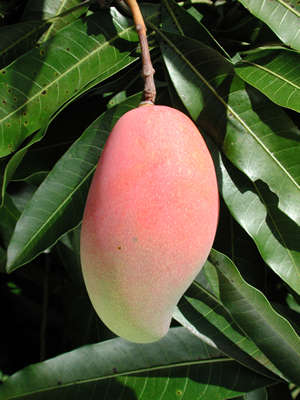
Summer is… when shorts and skimpy T-shirts feel as if you have too many clothes on. And that first glorious bite of the ripe golden mango ~ luscious and juicy and sweet as a love poem.

Summer is… vacations and holiday homework and escape from the routine.

Summer is… my very least favourite season.

Would you beg to differ?

(wahindia.com, 2002)
  

Wednesday, 30 May 2012

Musings: Sans Science


In front of the House of Science with my classmates at school. I'm seated, second from the right.


Decades ago, when schooling was different (and 10 + 2 was a haze in the future), we had to pick an optional stream for the Indian School Certificate (ISC) exam once our Std. VIII exams were done. That meant we could study either Science or Arts in the last three years at school, culminating in Std. XI.

At 13-plus, the choice loomed larger than a monster in our lives. How was I to choose? Should I base my decision on my marks, which showed soaring scores in English, Biology, Geography and Health Science, while the numbers took a drastic dip in Physics, Chemistry and Maths? Or should I give priority to my close bonding with my best friends ~ the very essence of residential school life in Jaipur ~ most of whom were opting for Science? Did it make sense to consult my class teachers, who kept pitchforking me into every inter-school or inter-house contest for dramatics, elocution, debating, even panel discussions? No, that would be insane. I’d probably talk circles around those sane souls.

Confused by the profusion of potential directions, like stray shafts of sunlight in a forest thicket, I couldn’t figure out why I wasn’t permitted to opt for just English poetry, medieval history, cartography, pottery, theatre ~ and perhaps hockey! There seemed to be no school course on earth that made that combination possible. But why?

What made the choice even more difficult was the fact that the brightest girl in our class (our icon of sorts) excelled at everything ~ athletics, hockey, art, every subject under the sun, even the popularity ratings! And she had opted for Science!

Science seemed by far the more glamorous option than mere Arts. Somehow, Einstein and Galileo exuded as more radiant aura than George Orwell or Jane Austen; advanced maths appeared more alluring than Shakespeare. Or so I thought then….

A bad bout of fever just before my Std. VIII final exams put paid to my chances of allowing my teachers to evaluate my talent, no matter how shadowy. Stuck in a bed in the infirmary, doused with green syrups and red, I wasn’t allowed to appear for my finals (perhaps the only time I wanted to). So, what was I to do?

Back home in Madras (not yet Chennai), promoted on the basis of past performance, the looming decision threatened to ruin my winter vacations. Science or Arts? Which was it to be? And how was I to choose?

And then, my father decided to take the matter in hand. “Have you made up your mind?” Baba asked one day after lunch, just as I was all set to plunge into the pages of Gone with the Wind.

“Not yet, Baba,” I said, “but I think I’d like to take Science.”  

“Why?” he persisted.

“I don’t know. I just feel like it,” I responded.

“It’s a good idea. But it only makes sense if you choose a career that is science-based. What would you like to do after college?”Baba explained patiently.

“I haven’t yet decided. I still have a few more years to go…”

“Do you want to be a doctor?” he said, helpfully.

“Never. I hate the sight of blood.”

“An engineer?”

“What will I do with all those machines and gizmos?”

“How about architecture?”

“Too much of maths in that…”

“A bio-chemist?”

“What do they do?”

And so, after we’d progressed down a list of 40 professions, Baba asked a final question before giving up, “Then, why do you want to take up Science?”

“Because all the clever girls are taking Science!”

And that’s how I came to study and celebrate Arts for the rest of my life….

(Sunday Herald, 1998)

Art: Khoj 2002 ~ The mind is a fertile field

Hema Upadhyay's letter to her parents sprouts in ragi

(I wrote this piece in 2002) 


Strappingh Michel Tuffery pats the tethered bull. "It tickles, does it?" he asks the large-eyed creature from a Mysore bovine sanctuary. "I won't hurt you. You're my Anna, I'm your little brother, your Thamba." Ritually tattooed from his waist to his knees, the Maori artist gently paints the bull's skinny shanks. Gradually, a tantalising red-and-black geometry emerges, while the artist and his work appear to blur into one.

"I feel visually spoilt in India," explains Wellington-based Michel, 36, at the Khoj 2002 International Artists' Workshop (October 19 to November 1) at Mysore's Le Olive Garden resort, that opened a local window into global art intersections. "Our family's from Samoa and Tahiti in the Pacific. From childhood, the cows and bulls of New Zealand have stuck in my head. But we've no respect for animals. When there's a water shortage, who suffers — the people or the bulls? To me, India seems like a Utopia for bulls."

As Michel erupts into a conceptually-motivated, masked "bull fight" on the Open Day, notions of art as painting or sculpture are collectively jettisoned. Taking off from a collage of corned beef cans blue-tacked to a wall, responding to an explosion of crackers taped to drawn bull-heads, he engages in a livewire performance that stuns the local populace. It signals a creative take-off, a careering off the beaten track, a time ripe for redefinitions.

But Michel wasn't unique among the workshop's 12 international and 12 Indian artists addressing individualistic concerns through local stimuli. In shifting the base of the high-profile, five-year-old Khoj artists' initiative from Delhi's Modinagar to the South for the first time, they engaged with "issues of new internationalism in the visual arts", according to a backgrounder. An offshoot of the Triangle Workshop in New York State in 1982, the brainchild of sculptor Sir Anthony Caro and collector Robert Loder, which resulted in the 1985 Thupelo Workshop in South Africa, Khoj represented the Indian colours of the enterprise.

What local stimuli did the artists respond to? Australia's Mandy Ridley, continuing her questioning of cultural identity through handcrafted objects, offered fluorescent plastic bags, each adorned with a contrasting rangoli cutout. Assaulted by a cacophony of Indian sounds, tantalised by alternate notions of beauty, Canadian academic and artist Gisele Amantea set up an audio piece of bathing sounds, juxtaposed against a delicate drawing of a pale hand captured between two mehndhi-rich ones. An intercultural exchange? Or donning The Other's identity? Maybe just cultural cross-dressing.

Closer home, Surekha from Bangalore struck gold at Mysore's Raju and Brothers studio. These reprints from old negatives, framed against red-bordered mirrors, unveiled the saga of the traditional jasmine braid that captures the cycle of Indian womanhood from birth to puberty, marriage and motherhood. Resonating touches in Surekha's continuing explorations of studio photography? A study blue curtain, and festivity-linked strings of blue lights.

Drawing on diaporic inspiration, Swiss-born Christoph Storz, who shuttles between Aarau and Bangalore, chose a vendor's trolley as his artistic tool after laboriously weeding a kolam-like path through a parthenium patch. "My art was homage to the local pushcart vendor," he elaborates, as marbles roll randomly on the trolley he trundles. "He sets out in the morning, not knowing which roads to follow or where his wares will sell. I was trying to explore his uncertain path."

Echoing Storz's frame of reference. Amsterdam-based and Mumbai-trained Mayura Subhedar, 29, tried to inject familiar feelings into an alien ambience by plastering a walled curve with rubbings of coconut palms and other artefacts from the resort, while studying the sway of shadowy fronds from a red oxide bench she built in. "My site-specific work relates to locating myself in a space," she explains. "I had to work my way through being a `foreigner,' so I had to jettison some baggage."

How did others cope with the workshop situation? Committed to socially-engaged practice, British artist Amy Plant treated her first Indian encounter as news by launching a tabloid, not as inquest but as inquiry. What appeared on its pages? Snippets of Khoj interludes. An interview with a local snake-catcher. A report on a burst pipe onsite. "It gave me a sense of the fabric of the place. So, I became a bit of a local myself," confesses Amy.

But, as local art students and lookers-on alike asked, did these free thinking experiments beyond the studio space constitute art? Or were they just radical departures from received notions? Such as the looped video installation by New Delhi's Ranbir Kaleka, 49, long based in London. Drawing on Mysore's Rangayana repertory theatre, he dramatised a very-Indian, quirky narrative, captured through painted wooden window frames, threaded through with appropriate Hindi film songs. "I treat video art as a democratic tool, almost like a sketch-pad, toying with ideas I've had for a while," Ranbir offers. "In India, video art still lags behind the West. It's useful to look at art within its age, time and context."

At Khoj, the theatrical found new interpretations through H.K. Dwarkanath, a stage designer at Rangayana, and Bangalore's Babu Eshwar Prasad, known for his elemental symbolism on flat hued canvases. Realised three-dimensionally, highlighted by theatrical lighting, Babu's set-like visual metaphors quickened to life by night. Inspired by the Mysore royal family's black-and gold carriage onsite, Dwarkanath mined their palace for inspiration. The result? An array of ghost-like plaster hands, shrouded in pale netting, sprout almost organically from the grass. Could they be supplicants for royal flavours? Or merely palace hands at work?

Other works took more topical, even political, cues. Sri Lanka's Sarath Kumarasiri touched on the ongoing Cauvery water dispute through swathes of flowing terracotta and blue cotton that unrolled onto a rocky incline, swathed in recent headlines. As literal, but more provocative, was an installation by Nigeria's Jacob Jiri, who garlanded a photograph of a baby abandoned in a dustbin, footnoted by a "soiled" sanitary towel. "I was making a statement, however offensive, about population control, provoked by the streets of Mumbai and Mysore," he stresses. What of the Gujarat strike? It surfaced in Baroda-based printmaker Vijay Bagodi's tented work, where sickles assume weapon-like overtones.

Alternate voices, couched expressively? Ragi sprouts from the soil reveal a letter to her parents in Baroda from Mumbai's Hema Upadhyay, a new turn to communications networks. Stridently, her citymate Reena Saini cues her uterus-based symbolism into an engagement with national integration through locally-crafted, tricolour-hued, natural fibre shapes strewn with rusty tools that flow over the floor like a river in spate.

Malaysia's Chang Yoong Chia installed moulded figures glued to the idiot box at the base of grouped coconut palms, in a "not conscious comment on urban lifestyles. While the TV is both intimate and universal, there's less intimacy between people today."

Often, complex issues surfaced through personal contexts. These included the Nix Art Museum by Bangladesh's Mahababur Rahman, a transparent tent studded with camouflage garments and war toys, in a pacifist statement buttressed by the auteur's cycle-borne daily performances. Bangalore's Biju Jose paid tribute to his late father's unlauded mechanical engineering drawings, propped like a musical score on stands that rose and fell to the shape of the backdrop of the Chamundi Hills, with a live horse installed by flickering lamplight to enhance realisation.

Dissimilar dimensions? The beauty versus ornamentation debate was realised by Brazil-born Berlin artist Carla Guagliardi's unadorned, curved red brick walls, offering "different feelings of space, newer perspectives of the same old thing", enhancing her exploration of spaces and water properties in Brazil and Europe. Enthused by Mysorean strands, Bangalore's Smitha Cariappa visually interpreted the local silk industry, transformed into hut-like spaces embellished by rangoli, hanks of silk, and symbolic silkworm evolution. N.N. Rimzon from Thiruvananthapuram, known for his innovative installations, chose a quieter note at Khoj — a series of locally-derived, yet tentative, drawings.

On another plane, Shambhavi from New Delhi chose to extend her horizons through a startling disc of rich blues and browns, made of iron, wood, cotton cloth, acrylic, graphite and oils, hung from the rafters. A neon-studded lamp enhanced the perspective, aided by fluttering pigeons on the beams.

Perhaps the most unusual participant at Khoj 2002 was Tibetan traditional painter Penpa Yaseel, 28, from the Tashi Lhundo monastery at Bylakuppe. Sitting amidst the silken splendour of gorgeous thangkas, Penpa explains, "I was trained in this style when I was 13. I came to India in exile in 1996. I'll never tamper with our sacred paintings, but I now feel I can do any kind of painting, maybe even depict Tibetan lifestyles."

Can art remain infinitely open-ended in our questioning age? When will its borderlines with technology blur forever? Can Khoj-like camps generate global amity? These questions remain unanswered despite the questing at Khoj.

As Khoj's central coordinator Pooja Sood observed in a recent brochure, the communal enterprise that has touched over a hundred artists is "more in the nature of an impetus rather than a period of sustained reflection". Ranbir concurs, "Workshops like this can stimulate thought, though perhaps not complete execution." A germ of thought that could sprout to fruition in the future?

(The Hindu Sunday Magazine 2002)